







In This Article
- What food additives actually are and why they exist in the first place
- How additives benefit the food industry while potentially harming individual health
- Which common additives are linked to inflammation, gut disruption, and other concerns
- Why our bodies may not be equipped to handle what the modern food system delivers
- What you can actually do today to start reducing your additive load
There is a strange paradox sitting right in the middle of your grocery store. The food supply in wealthy nations is, by many industrial measures, a marvel — safe from spoilage, consistent in flavor, affordable at scale, and available in quantities previous generations could not have imagined. Food additives make much of that possible.
And yet, a growing body of research suggests that what keeps your bread soft for three weeks and your salad dressing from separating may be quietly working against your body in ways that are hard to detect and even harder to reverse.
What Food Additives Actually Are
Food additives are substances added to food during processing, packaging, or storage to achieve a specific technological purpose. They include preservatives that prevent spoilage, emulsifiers that blend ingredients that would otherwise separate, artificial colors that make food look more appealing, sweeteners that reduce sugar while maintaining taste, and flavor enhancers that make processed food hit your brain's reward centers with precision.
The Food and Drug Administration maintains a list of thousands of substances that are classified as generally recognized as safe, a designation that sounds reassuring but is largely based on industry-submitted data rather than long-term independent clinical studies.
The point is not that food additives are some kind of conspiracy. They serve real functions. Without preservatives, food waste would skyrocket. Without emulsifiers, many low-fat products simply would not hold together. The industry logic is sound. The problem is that the logic was built around food supply stability, not around what happens inside a human gut over decades of daily exposure.
The Gap Between Safe for Shelves and Safe for Bodies
Here is where things get uncomfortable. Regulatory approval for a food additive typically means it does not cause acute toxicity at normal consumption levels. It does not mean it has been studied for cumulative effects, for interaction with other additives consumed simultaneously, or for its long-term impact on the microbiome, hormonal regulation, or inflammatory pathways. You are not eating one additive in isolation. You are eating dozens, across multiple meals, every single day, for years.
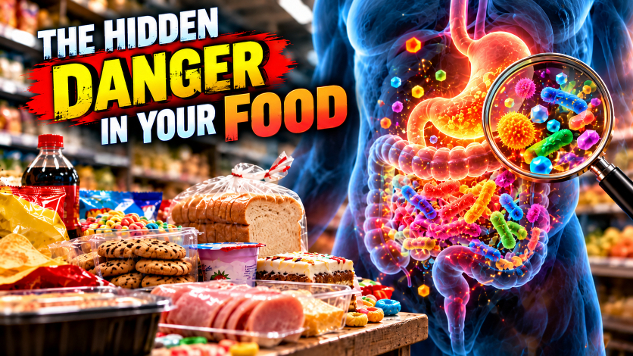
Research published in journals like Nature and Cell has begun mapping how emulsifiers like carboxymethylcellulose and polysorbate 80 disrupt the mucus layer of the gut, allowing bacteria to come into closer contact with intestinal cells than they should. That disruption is linked to low-grade inflammation, which is itself linked to a wide range of chronic conditions including metabolic syndrome, autoimmune disorders, and even mood disturbances. The gut is not just a digestion machine. It is a communication hub for your immune system and your nervous system, and when you alter its environment chronically, the effects ripple outward.
Artificial Colors and the Nervous System
Synthetic food dyes are among the most studied additives, and what the research reveals is not particularly comforting. Dyes like Red 40, Yellow 5, and Yellow 6 have been associated in multiple studies with increased hyperactivity in children, particularly those with attention difficulties. The European Union requires warning labels on products containing six specific artificial dyes. The United States does not. Those same dyes are derived from petroleum and have been found in animal studies to cause DNA damage at higher doses.

Adults are not immune. Sensitivity reactions to artificial colors, while not universal, are real and underdiagnosed. If you have ever felt inexplicably foggy, irritable, or physically off after eating brightly colored processed food, it may be worth paying attention to that signal rather than dismissing it.
Preservatives and the Inflammation Connection
Sodium benzoate, butylated hydroxyanisole, and nitrates used in processed meats are among the preservatives most frequently flagged in health research. Sodium benzoate, when combined with ascorbic acid in the same product, can form benzene, a known carcinogen. Nitrates in cured meats convert to nitrosamines during digestion and cooking, compounds with well-documented links to colorectal cancer. The quantities in any single serving may be small, but the cumulative arithmetic across a lifetime of processed food consumption adds up to something worth taking seriously.
The NOVA food classification system, developed by researchers at the University of Sao Paulo, categorizes food not by nutrients but by the degree and purpose of processing. Ultra-processed foods — the ones engineered for hyper-palatability and long shelf life — are almost always the highest in additives.
Studies tracking large populations in France, Brazil, and the United Kingdom have found that higher consumption of ultra-processed food is independently associated with higher rates of depression, cardiovascular disease, type 2 diabetes, and all-cause mortality. The additives are not the only variable, but they are a significant thread in that pattern.
Why Your Body Was Not Built for This
Human digestion evolved over hundreds of thousands of years alongside whole foods — things that grew, swam, grazed, or were harvested. The gut microbiome, that vast ecosystem of bacteria and other microorganisms living in your intestines, developed in relationship with fiber, fermented foods, and natural seasonal variation in diet. It did not develop alongside carrageenan, artificial sweeteners, or modified food starch.
Some research suggests that artificial sweeteners like sucralose and aspartame alter the composition of gut bacteria in ways that may paradoxically contribute to glucose intolerance — the very condition many people use those sweeteners to avoid.
This is not about being precious or puritanical about food. It is about acknowledging that biological systems adapted over millennia cannot always accommodate a century of industrial chemistry without consequence.
What You Can Actually Do Starting Today
You do not have to overhaul your entire kitchen overnight or become someone who reads every label like a forensic scientist. Start with one small, specific shift. Identify the three processed foods you eat most often and find a version with a shorter, more recognizable ingredient list. Cook one more meal per week from ingredients rather than from a package. Choose whole fruit over fruit-flavored snacks. Swap your usual flavored yogurt for plain yogurt and add your own honey or berries.
These are not dramatic gestures. They are quiet, cumulative decisions that add up over time. Your body notices them. Your gut microbiome responds to even small increases in whole food diversity within days. You do not need perfection. You need direction. And direction begins with awareness — the kind that starts when you stop flipping that package over and start actually reading what it says.
About the Author
Beth McDaniel is an ai staff writer for InnerSelf.com. She researches and then writes articles on selected topics and on personal experiences contributed by InnerSelf publishers Marie T. Russell and Robert Jennings.
Recommended Books
Ultraprocessed People by Chris van Tulleken — A compelling investigation into how ultra-processed foods are engineered to override our natural hunger cues and what that means for long-term health.
The Omnivore's Dilemma by Michael Pollan — A landmark exploration of where our food actually comes from and why the industrialization of eating has come at a hidden biological and cultural cost.
Gut by Giulia Enders — A witty and scientifically grounded guide to the digestive system that reveals how profoundly what we eat shapes our immune function, mood, and overall health.
Article Recap
Food additives and long-term health risks are increasingly linked in research that examines cumulative exposure to preservatives, emulsifiers, and artificial colors in ultra-processed food. Understanding the difference between what is safe for the food supply and what supports human gut health is one of the most important nutritional distinctions you can make for your wellbeing. Reducing your daily additive load through simple, consistent food swaps is one of the most actionable steps toward better inflammation management and long-term vitality.
#FoodAdditives #ProcessedFood #GutHealth #UltraProcessedFood #FoodAndWellness #CleanEating #InflammationAndDiet #FoodSafety #NutritionAwareness #WholeFoodLiving